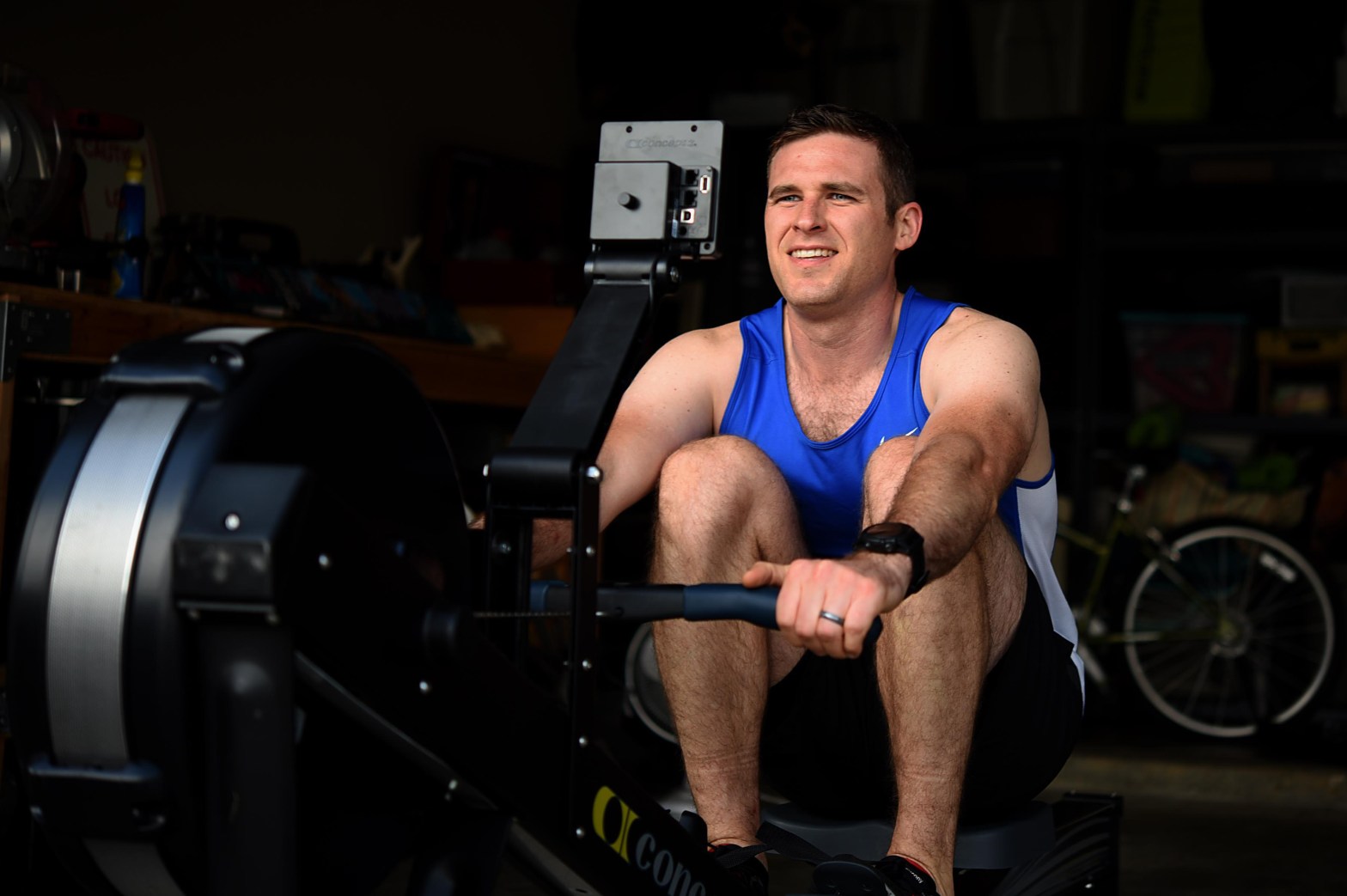
IMPROVE YOUR INDOOR ROWING TECHNIQUE

Time after time the indoor paddling machine is ignored on the rec center floor, seeming threatening on the off chance that you haven’t took in the nuts and bolts of good indoor paddling system. Learning the six phases of a solid indoor paddling stroke will assist you with maximizing every exercise and guarantee you are utilizing your water rowing machine effectively.

Indoor paddling improves cardiovascular continuance and solid quality by connecting all significant muscle bunches at the same time. Not exclusively will a thorough exercise on an indoor paddling ergometer consume fat and combust genuine calories, it will challenge you regardless of what level of wellness you are.

Here’s a guide on how to use a rowing machine the right way.

Great INDOOR ROWING TECHNIQUE EXPLAINED IN 6 SIMPLE STEPS

Figuring out how to ace a decent indoor paddling method implies you can accomplish a smooth redundant cyclic movement on the indoor rower. The three stages from catch to complete are commonly gathered as “The Stroke”, as this is the point at which the viable work is done, and the three stages from Finish to Catch are classified “The Recovery”. The way to great indoor paddling procedure is to think about each of the six developments as a total cycle, in which one stage streams flawlessly into the following.

TOP INDOOR ROWING FORM EXPLAINED

THERE ARE SIX PHASES TO COMPLETING A ROWING STROKE.

POSITION ONE – ARMS AWAY

Sit with the legs straight, back straight yet inclining somewhat over from the hips, arms straight and hands level with the lower ribs. Presently swing back.

POSITION TWO – BODY PREP

Legs still straight, back still straight, however now inclining marginally forward from the hips, arms still out in front. Presently slide and lean forward. NOTE: your hands should now be forward of your knees while your legs are still straight.

POSITION THREE – THE CATCH

Legs completely packed – intend to get shins near the vertical, yet not past. Back still straight, and inclining marginally forward, as in position B, arms still out in front. Presently drive hard – this is THE CATCH

POSITION FOUR – DRIVE ONE

Knees somewhat fixed so seat is currently at mid-purpose of movement, back arms still similarly as in positions 2 and 3. Presently keep up the stroke.

POSITION FIVE – DRIVE TWO

Knees about straight, so seat is at 3/4 point of movement, back still straight however now inclining somewhat once more from hips. Arms still straight. Presently crush through.

POSITION SIX – THE FINISH

Legs presently completely broadened and with back still straight according to situate 5. Keep arms pulled in so hands are near chest, lower arms even, and elbows close in to rib confine. This is THE FINISH.

The Right Way to Use a Rowing Machine

Once consigned to the rear of the exercise center, the paddling machine is encountering a flood in prevalence — to such an extent that there are presently whole boutique studios gave to it and its magnificent all out body benefits.

Confided in Source

However, the machine can be scary from the outset. Do I lead with legs or arms? Should my shoulders feel sore? What’s more, for what reason do my feet continue sneaking out of the lashes?

You’re not the only one. The most significant thing to recollect is: “It’s about power, not speed,” says Melody Davi, director of educator activities at SLT. In the event that you leave a paddling class with a sore back, you’re treating it terribly, Davi says.

Rather, center around utilizing your lower-body powerhouse muscles — glutes, hamstrings, quads — to propel yourself out and afterward tenderly skim back in. Before we jump into more procedure, here are two terms that will help direct your exercise:

Rowing terms

Strokes every moment

This is how frequently you push (stroke) in 1 moment. Keep this number at 30 or less, Davi says. Keep in mind: It’s about power, not simply tossing your body to and fro.

Split time

This is the measure of time it takes to push 500 meters (or 33% of a mile). Go for 2 minutes or less. To expand your pace, push out with more power — don’t simply siphon your arms quicker.

The most effective method to ace appropriate paddling machine structure

  1. Attempt leg seclusions

Start by holding the paddle with arms expanded, knees bowed, and weight on the wads of your feet. This position is classified “the catch.”

With your back straight and center drew in, push back utilizing just your legs, moving through your feet so they’re level when your legs are broadened. Keep your arms reached out all through.

  1. Include arm segregations

After you’ve become acclimated to pushing with your lower body, practice arm disconnections. With legs straight, pull the paddle toward your chest. Twist your elbows out to the sides and contact the paddle simply under your chest.

Hold the paddle daintily (more on that beneath) and utilize your upper back (not shoulders or biceps) to pull the paddle toward you. Connect with indistinguishable muscles from you accomplish for a twisted around push.

  1. Unite everything

With your back straight, center drew in, and bundles of your feet solidly in the ties, push back first with the lower body, at that point utilize your upper back to pull hands toward your chest. Discharge your arms toward the base and curve your knees to coast back to beginning position. Think: legs, arms, arms, legs.

Click here if you’re looking for more info on indoor rowing machine reviews.

Here’s another tip: Take one beat to push out and two beats to coast back, Davi says. As it were, your move back ought to be twice as quick as your arrival to beginning position.

Regular paddling mix-ups and how to fix them

Slip-up No. 1: You hunch your back

This typically implies you’re giving your shoulders a chance to do practically everything.

The fix: Start with flawless stance.

In get, drive your shoulders back (to open chest) and down (so there’s no strain around your neck). Hold back your straight by connecting with your center and breathing profoundly. Trust us, it’s difficult to take full breaths when you have terrible stance.

Error No. 2: You make a scooping movement as you push

In the event that you twist your knees before your arms are completely reached out on the arrival, you’ll have to make this scooping movement to abstain from hitting your legs with the paddle. Paddling is a chain response, so one poor structure decision can prompt another. Like this next one…

Error No. 3: You raise your arms excessively high

Try not to behead yourself with the paddle! Pulling the paddle as far as possible up to your jaw isn’t simply inappropriate behavior, it most likely means you’re utilizing more vitality than what’s important, Davi says.

The fix: Bring paddle to rest just beneath your chest.

Utilize upper-back muscles to pull the paddle toward your chest. Toward the finish of each line, elbows ought to be bowed in excess of 90 degrees and lower arms ought to be even with your rib confine.

Misstep No. 4: You let your knees drop to the side

We love unwinding, however giving your knees a chance to flounder wide is excessive for an exercise. It likely means you’re not drawing in inward thigh muscles or enacting your hip flexors.

The fix: Finish with your knees in accordance with your hips.

Utilize your internal thighs to keep those knees near one another or consider dashing up your legs as you drive away and float in.

Another fix: Put the tie over your enormous toe joint.

A subsequent method to prevent your knees from tumbling is to tie in your feet accurately. The customizable lash goes over the joint at the base of your large toes. Toes should twist easily so you’re ready to push off the wads of your feet.

Mix-up No. 5: You have an extremely strong grip on the paddle

Good day, allow’s chill to out. We realize you’re energized, yet there’s no compelling reason to fold your thumbs over the paddle or hold tight as though it’s a draw up bar. Odds are a grasp like this will make pointless pressure in your lower arms.

The fix: Hold the paddle with three fingers.

Spot your hands outwardly of the paddle (not the middle). Make you happy fingers off the end and lay your thumbs on top; don’t fold them over. Hold the paddle with the principal, center, and ring fingers of each hand.

Each time you pull back, make sure to utilize your upper back, not shoulders and biceps. This will help ease the heat off your hands.

Doing this will help to improve your rowing technique.

Exercise

Since you’ve culminated your shape and comprehend the essential wording for paddling, take it up an indent and do Melody’s paddling exercise here.

You’ll perform moves both on and off the paddling machine to keep things intriguing and extraordinary. Anticipate boards, lurches, and squats (among others) for an all out body exercise. It will adequately target and reinforce every one of the muscles you have to bring genuine power into your paddling sessions.
Rowing Machine Benefits

There’s a motivation behind why paddling teams — the individuals in the long, rapid hustling shells, with a coxswain woofing orders at them from a seat in the back — are so fit. Paddling gives a colossal full-body exercise and packs numerous

You can appreciate similar advantages by turning out on a stationary paddling machine at the exercise center — or on the off chance that you experience passionate feelings for this difficult exercise, you can even purchase your very own paddling ergometer to use at home.

It’s a Great Calorie Burn

On the off chance that your wellness objectives incorporate thinning down, a standout amongst other paddling exercise benefits is its effective calorie consume.

Accurate vitality use changes as indicated by various components, including body creation, by and large body weight and how hard you’re working out. Be that as it may, despite the fact that it’s hard to nail down an exact number outside of a clinical situation, calorie consume gauges from Harvard Health Publishing give you an incredible spot to begin:

As indicated by these figures, in the event that you weigh 155 pounds, you can consume 260 calories in a half-hour of moderate-force stationary paddling. Knock that up to enthusiastic force and you’ll consume around 216 calories in a half-hour. On the off chance that you weigh 185 pounds, those numbers hop to 311 calories for a moderate exercise and 377 calories for a serious one.

Tips

Not certain if your exercise qualifies as moderate or fiery? On the off chance that you rate your effort on a size of 0 to 10 —

where 0 is supreme rest and 10 is the quickest dash you can oversee —

moderate action ordinarily falls around a 5 or 6, while enthusiastic effort is for the most part around a 7 or 8.

As you get progressively fit, you’ll have the option to work out more earnestly on your paddling machine before you hit that degree of saw effort. A few coaches utilize a rating of apparent effort scale that extents from 6 to 20.

Paddling Is a Full-Body, Low-Impact Workout

Relatively few stationary exercise machines furnish you with a genuine chest area exercise. In any case, when you take a seat at the paddling machine, muscles worked principally incorporate your back, your shoulders and the pulling muscles in your arms, alongside your glutes, thighs and even a touch of help from your calves as you push away from the foot stage.

The way that your feet never leave that stage is a reward as well: Because you’re not skipping or bouncing, paddling is viewed as a low-sway exercise, which implies it might in any case be endured by individuals whose joint, bone or solid wellbeing prevent them from doing high-affect hopping exercises.

A Rowing Workout Benefits Your Heart and Lungs

Since paddling gets your body’s enormous muscle bunches moving monotonously for an all-inclusive period, it qualifies as a cardiovascular exercise or, in the event that you like, an oxygen consuming exercise. This sort of activity packs various demonstrated medical advantages, from boosting your safe framework to improving your cholesterol and diminishing your danger of numerous interminable wellbeing conditions, including corpulence, coronary illness, hypertension, Type 2 diabetes, metabolic disorder and stroke.

Here’s some tips on how to use a rowing machine.

In the event that you as of now have incessant wellbeing conditions, a high-impact exercise like utilizing a stationary rower can be gainful to help hold them within proper limits — yet in case you’re under a specialist’s consideration, you should consistently tell your doctor before you start another activity program.

High-impact practice has additionally been appeared to support your state of mind, and the quality, continuance and generally speaking wellness that cardio gives can even assist you with remaining free and appreciate better personal satisfaction as you age.

Understand increasingly: 11 of the Best Video Workouts You Can Do Anywhere

Some Less Scientific Rowing Machine Benefits

Despite the fact that there’s a ton of science to back the medical advantages of turning out on a paddling machine, there are additionally some genuine world, if fairly less-logical, advantages to this specific exercise machine.

Despite where you’re utilizing your paddling machine, in the event that you figure out how to discover your way into “the zone,” the tedious buzz or wash of the obstruction instrument (which might be fan edges utilizing air as opposition or water-filled containers that offer obstruction) can skirt on a quieting, thoughtful encounter — a pleasant balance to the copy in your thigh, bear and back muscles as you control through the exercise.

In any case, the genuine advantages of this kind of machine become generally evident in the event that you get one to use at home. On the off chance that you happen to live in an upper-floor loft or townhouse, having a paddling machine implies you can practice unobtrusively and don’t need to stress over your ground floor neighbors grumbling about the commotion of you hopping around overhead.

Many home-use paddling machines are likewise worked to crease for capacity under your bed or in a storeroom, so they won’t occupy a lot of room. Furthermore, on the grounds that they’re anything but difficult to move around, you can without much of a stretch position your stationary rower before the TV while you watch most loved shows, or rotate it to peer out the windows and catch a delightful dawn or dusk as you work out.

Understand progressively: 20 Health and Fitness Gadgets That Actually Work

Watch Your Rowing Form

Albeit turning out on a paddling machine is a decent exercise, you’ll possibly make the most of its numerous advantages in the event that you utilize the best possible structure. There’s an inclination for individuals who aren’t acquainted with genuine paddling to just hurry the seat to and fro, pulling on the handle now and again, however there’s significantly more to legitimate paddling structure than that. In the event that you need to benefit from your paddling machine, you have to get as close as you can to a similar structure as an aggressive rower.

It isolates the paddling movement into two bits: the drive and the recuperation. To begin the drive, twist your knees as the seat slides toward the front of the machine. Allow your to arms fix and pivot tenderly forward from the hips until — if adaptability permits — your elbows are past your knees. Take care not to hunch your shoulders forward and don’t propel yourself into an awkward stretch; adhere to a torment free, peaceful scope of movement.

From this position, start the ground-breaking drive by driving the seat back with your legs. As your legs fix, let your middle pivot marginally once again from the hips (as though it were indicating 11 o’clock on a clock face), at that point acquire your hands near your body. That finishes the drive.

For the recuperation segment of the stroke, you play out those developments in switch: First let your arms expand; at that point pivot your middle marginally forward from the hips (to around 1 o’clock on a clock face), lastly, enable your legs to twist as you slide forward to the front of the machine.

Design a site like this with WordPress.com
Get started